
×
Professional Renovation Solutions in Qatar.
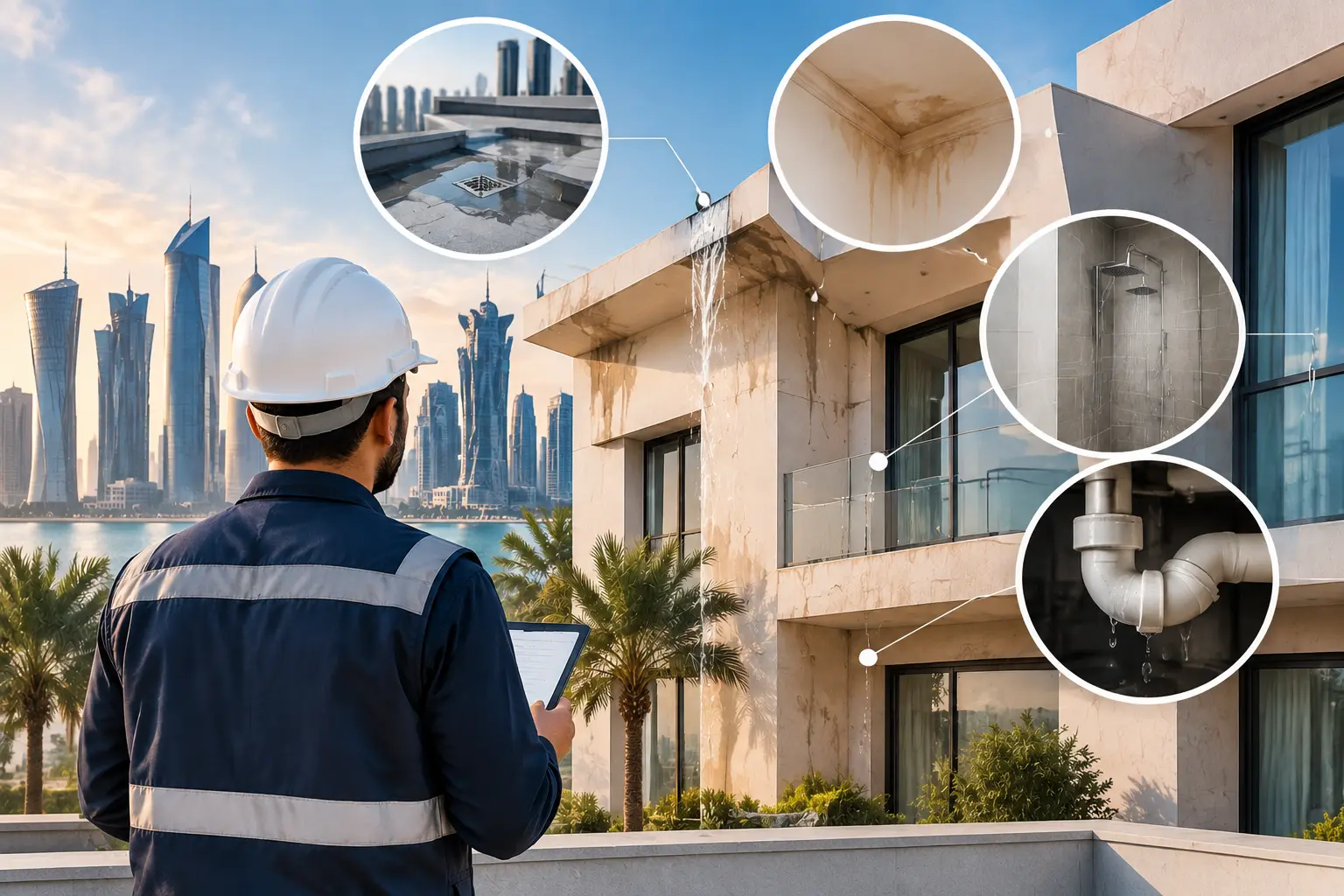
To fix a water leak in a Qatar building, find the exact source first, repair or replace the failed part, then waterproof the area with a system that suits the surface, and test it before handover. Sealing the stain on the ceiling does not work, because water often travels from the roof, a pipe or a joint to a spot far from the real leak.
This guide covers why buildings leak in Qatar, how to trace the source, the right waterproofing service for each area, and what to expect from a contractor.
Cause | What happens |
Extreme heat | According to Jefcon, roof surfaces regularly exceed 65 to 70°C in summer. Concrete, steel and masonry expand by day and contract at night, which opens hairline cracks and splits joints and membranes. |
Humidity and salt air | Coastal humidity and salt reach reinforcement steel. Corroding rebar expands and cracks the concrete around it. |
Sudden heavy rain | Roofs and drains built for dry weather fail when a storm arrives. During the November 2016 floods, roofs leaked in Doha malls. Countrywide downpours returned in March 2026 (Al Sarayat season). |
High groundwater | In some coastal areas the water table is under 1 metre deep, so basements, lift pits and retaining walls sit against water. |
Poor original waterproofing | Thin membranes, missed corners, bad drains, or concrete poured in extreme heat that shrinks and cracks early. |
Ageing | Membranes, sealants and flashings wear out. Jefcon’s own system lifespans run from 8 to 20 years. |
Plumbing faults | Leaking pipes, toilet cisterns and underground tanks, often found only through a high water bill. |
Use this table to narrow it down before calling anyone.
What you see | Likely source |
Stain on top-floor ceiling | Roof membrane, cracks, drain or flashing |
Stain below a bathroom or kitchen | Floor waterproofing, shower tray, pipe joints |
Damp at the bottom of ground-floor or basement walls | Groundwater or failed below-grade waterproofing |
Damp around balcony or terrace doors | Balcony membrane, threshold, drainage falls |
Damp that appears only after rain | External wall cracks, roof, joints, flashing |
Damp that appears regardless of weather | Plumbing or underground tank leak |
Rust and drips under a metal roof | Corroded sheets, loose fixings, failed flashing |
The 10-minute meter test for plumbing leaks: turn off all taps, washing machines and irrigation, then check your water meter (often near the villa entrance). If the dial is still moving, you have an active leak. Also check toilet cisterns, and note whether your underground tank pump runs more often than before.
Area | Fix |
Concrete roof or terrace | Torch-applied bituminous membrane or PU liquid membrane, after repairing cracks and preparing the surface |
Metal roof | Sheet repair or replacement, rust treatment, flashing repair, then elastomeric acrylic coating |
Roof gutters and planter boxes | Local waterproofing and drainage correction |
Bathrooms and kitchens | Remove failed screed or tiles if needed, re-waterproof the floor and wall upturns, retile |
Water tanks | Cementitious or crystalline coating; use potable-water certified systems for drinking water |
Basements, lift pits, retaining walls | Crystalline or cementitious systems, plus injection grouting for active leaks |
Active cracks and leaking joints | PU or epoxy injection grouting, often without demolition |
Swimming pools and water features | Pool-grade waterproofing after inspection |
Balconies and terraces | Membrane system with correct falls to drains |
Method | Best for | Typical lifespan |
Torch-applied bituminous membrane | Concrete roofs, terraces | 10 to 15 years |
PU liquid membrane | Roofs, balconies, irregular shapes | 10 to 20 years |
Cementitious or crystalline coating | Water tanks, basements, wet areas | 10 to 15 years |
Elastomeric acrylic coating | Metal roofs, sun-exposed surfaces | 8 to 12 years |
Injection grouting | Active cracks and leaking joints | Long-term (repair, not a coating) |
Lifespans are Jefcon’s figures and depend on preparation, maintenance and exposure.
A proper repair follows these steps, which is how Jefcon Qatar works:
Ask any contractor if they flood-test before handover. If they do not, the leak may show up on the first rainy day or the next time the area is washed.
The price depends on:
Jefcon Qatar gives a free inspection and an itemised written quotation, so you see the exact price before work starts.
Note: This is general information, not legal advice.
Send photos of the leak on WhatsApp or call for a free site inspection and written quotation.
Jefcon Qatar, Doha Phone / WhatsApp: +974 5511 9950. For 24/7 emergency response call now!
Look at where the stain appears and when. Top-floor stains point to the roof, stains under wet rooms point to floor waterproofing, damp that appears only after rain points to cracks or flashing, and constant damp points to plumbing. A professional inspection confirms the source.
Often yes for active cracks and leaking joints, using PU or epoxy injection grouting. Failed bathroom floors or roof membranes may need removal of the old layer.
For concrete roofs, torch-applied bituminous or PU liquid membranes. For metal roofs, elastomeric coating after rust and sheet repair. The right choice depends on the surface and condition.
Typically 8 to 20 years depending on the system, preparation and maintenance.
Heat makes the roof expand and contract every day, which opens cracks and stresses the membrane. Rain, cleaning water or ponding then finds these openings.
Turn everything off and watch the water meter. If it keeps moving, there is a leak. Also check toilet cisterns and whether the underground tank pump runs more often.
Yes. Jefcon Qatar offers a free site inspection followed by a written itemised quotation.
Yes, Jefcon offers 24/7 emergency response for active leaks and sudden roof damage.
One Company. Complete Solutions — Renovation, Fit-Out & Finishing Experts in Doha-Qatar
Copyright © 2012 jefconqatar. All Rights Reserved.
Developed & Managed By Swift Tech 3